Early Beginnings
Let me tell you a tale as ancient as the mountains and as vast as the open sky. It is the story of the origins of martial arts, a story etched into the very bones of the earth and whispered by the winds through the ages.
Long, long ago, when the world was young and humanity was but a fledgling in the cradle of nature, survival was the greatest teacher. In those days, the people lived among the wild beasts, the jagged cliffs, and the boundless forests. Their lives were a delicate dance with danger—one misstep could mean the end. And so, they learned to fight, not for glory or conquest, but to endure.
In hidden caves where shadows flicker like the ghosts of the past, stories of this struggle were painted upon the walls. Imagine, if you will, the Altamira Cave in Spain or the Lascaux Cave in France. Within those sacred spaces, artists of old captured the spirit of the hunt and the clash of survival. They painted groups of hunters moving as one, wielding sticks and stones in unity against prey or rivals. Ah, such images—primal, fierce, and alive!
Far to the east, in the Bhimbetka Rock Shelters of India, there are more whispers of this tale. There, images over ten thousand years old tell of humans grappling with the forces of nature. Perhaps it was a hunt, perhaps a confrontation. Who can say? What we do know is that those pictures hold the heartbeat of our ancestors' struggles, their courage in the face of the unknown.
Now, as the people grew wiser and their hands more skillful, they transformed tools into weapons. The sharp flint of a spearhead, the heavy swing of a club, the precise edge of a stone axe—these were not mere instruments. No, they were extensions of will, forged from necessity and honed by experience. Across the oceans, in what is now North America, there were the Clovis spear points, sharp and deadly as the talons of an eagle. In the ancient fields of Europe, the Neolithic stone axes carried the strength of mountains.
With each new tool, the people learned to master not just their environment, but themselves. They discovered how to move, to strike, to defend. From these humble beginnings arose the seeds of martial arts—a practice that would evolve into a symphony of discipline, power, and spirit.
So you see, the roots of martial arts run deep, intertwined with the essence of survival itself. From the shadows of ancient caves to the sharp clang of weapon on weapon, it is a legacy passed down through time, a gift from those who came before us.
The ancient civilizations of Egypt and Mesopotamia, cradles of human ingenuity and resilience, were also the birthplaces of structured combat and martial discipline. In these lands, where the Nile and the Tigris gave life to flourishing cultures, the need for self-defense and military prowess gave rise to early systems of martial training. Their stories, preserved in tombs and carved into stone, reveal the artistry and strategy behind their approaches to combat.
Egypt and Mesopotamia
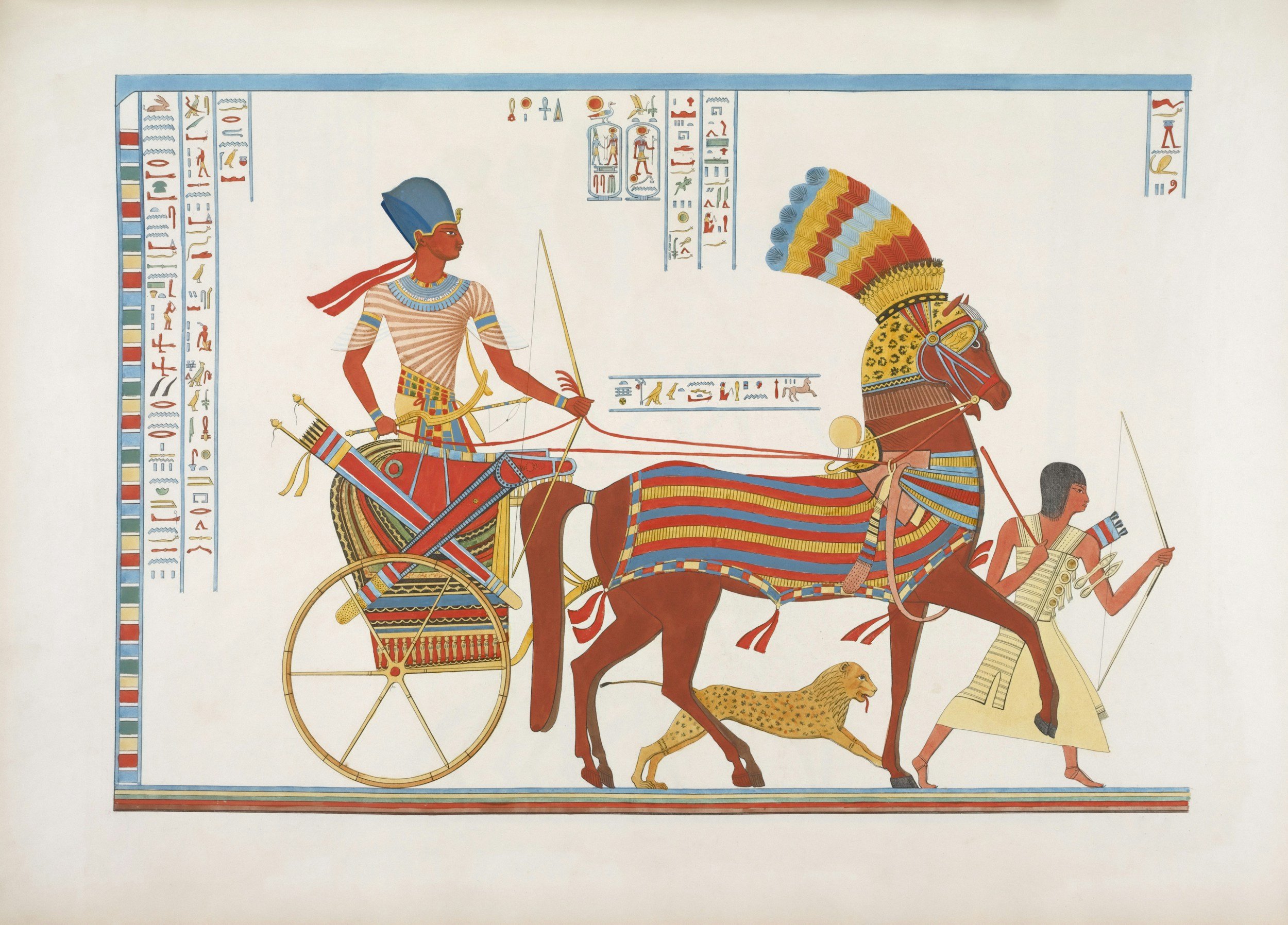
The ancient civilizations of Egypt and Mesopotamia were not only centers of innovation and culture but also the foundations of structured combat systems. In these early societies, martial skills were essential for survival, self-defense, and the maintenance of social and political order. The evidence of their martial practices is vividly preserved in their art and writings, giving us a window into their techniques and philosophies of combat.
In Egypt, the tomb paintings of Beni Hasan, dating back to around 2000 BCE, provide a remarkable record of wrestling and combat training. These depictions show detailed holds, throws, and grappling techniques, suggesting that combat was not merely a chaotic struggle but a discipline with specific methods and strategies. The scenes also include the use of weapons such as maces, bows, and shields, underscoring the importance of martial training in both personal defense and military preparation (Kendall, 1974). This structured approach reflects the organized and hierarchical nature of Egyptian society, where physical prowess was valued not just in warfare but also in rituals and competitions.
Mesopotamia, the land between the Tigris and Euphrates rivers, offers a parallel legacy of martial development. Reliefs from the Akkadian and Assyrian periods depict soldiers engaging in training exercises, battles, and ceremonial displays of strength. These carvings often feature swords, spears, and shields, tools that defined the battlefield of the ancient Near East. Cuneiform texts provide further evidence, hinting at the existence of combat manuals or codified techniques, demonstrating a systematic approach to preparing warriors for the rigors of battle (Black & Green, 1992).
A potential biblical reference to the significance of wrestling as a martial and symbolic act can be found in the story of Jacob wrestling with an angel, as recounted in the Book of Genesis. In this narrative, Jacob wrestles through the night with a divine being at Peniel, refusing to relent until he receives a blessing (Genesis 32:24–30). While primarily a spiritual and symbolic encounter, the physical act of wrestling reflects the deep cultural significance of grappling and hand-to-hand combat in ancient societies. This moment underscores the universality of combat as both a literal and metaphorical struggle, resonating with the disciplined and ritualized martial practices of civilizations like Egypt and Mesopotamia.
Both Egypt and Mesopotamia treated martial skills as an integral part of their cultures, embedding them in their art, literature, and daily life. These practices laid the groundwork for the development of structured martial arts in later civilizations, demonstrating how the necessity of survival could evolve into a disciplined and respected craft.
References:
Kendall, T. (1974). Wrestling Scenes in the Tomb of Beni Hasan. American Journal of Archaeology.
Black, J., & Green, A. (1992). Gods, Demons, and Symbols of Ancient Mesopotamia: An Illustrated Dictionary. The British Museum Press.
The Holy Bible, Genesis 32:24–30 (NIV).
CHINA
China's early history is rich with tales of resilience and ingenuity, where the art of combat evolved alongside the nation's growing culture and philosophy. Martial traditions in China are deeply intertwined with its ancient dynasties, reflecting a need for survival, discipline, and the cultivation of both body and spirit. These early practices were not only tools of war but also expressions of cultural identity and individual skill.
During the Xia and Shang dynasties, between 2000 and 1046 BCE, the seeds of Chinese martial arts began to take root. In a land of warring clans and expanding territories, physical combat was as vital as strategy. These early centuries witnessed the development of Shuai Jiao, or Chinese wrestling, one of the oldest documented martial traditions. Shuai Jiao combined grappling and throwing techniques, emphasizing leverage and precision to subdue opponents. This practice laid the foundation for China's extensive martial heritage, focusing on controlled movements and mastery of the body (Wong, 2001).
The discipline of Shuai Jiao flourished, becoming more than a mere tool of survival. It found a place in military training, competitions, and public displays, evolving into a refined art that symbolized strength and skill. Its techniques and principles echoed throughout China's martial history, influencing countless other forms of combat that would emerge in later eras.